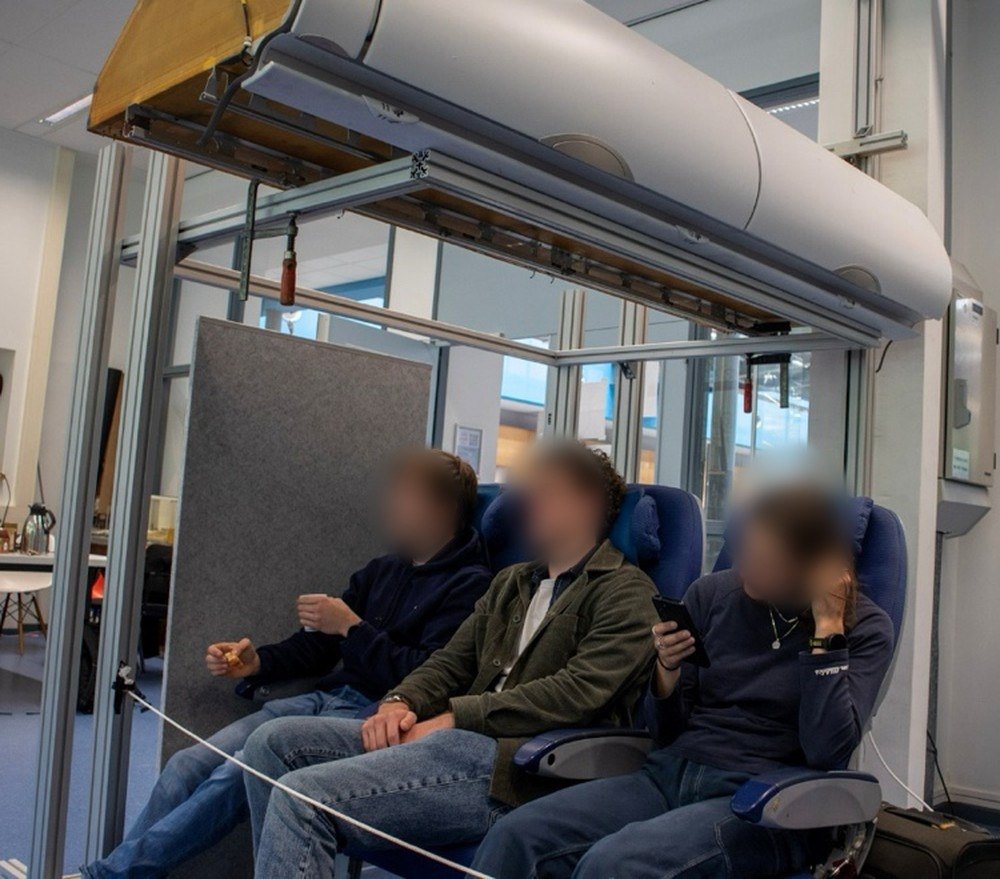
Passengers
Personal space
How much space people need to sit, sleep, eat and get past each other, and how that space feels.
Motion capture · comfort ratings · seat-row mock-up
TU Delft × Collins Aerospace × Spark Design & Innovation × NPK Design · Research project 2026–2027
The smallest cabin interior that still works for passengers, crew and people with reduced mobility.
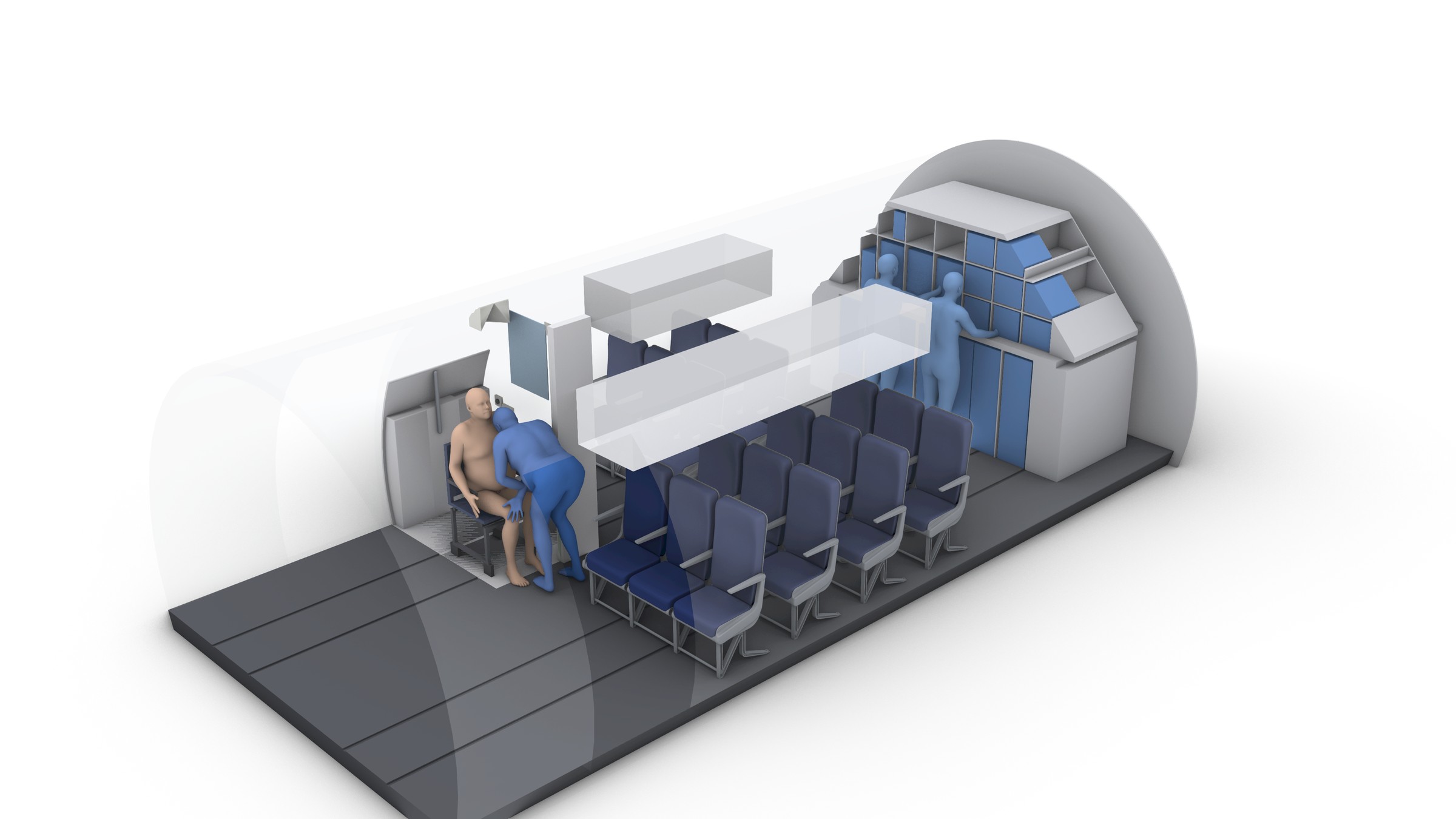
Airlines need seats; passengers, crew and regulators need space: in the aisle, the galley, the seat row and the lavatory. New US DOT rules (from 2032) ask that a wheelchair user and a caregiver fit behind a closed lavatory door.
We study how three groups of people use a single-aisle cabin, in full-scale mock-ups and with motion capture.
How much space people need to sit, sleep, eat and get past each other, and how that space feels.
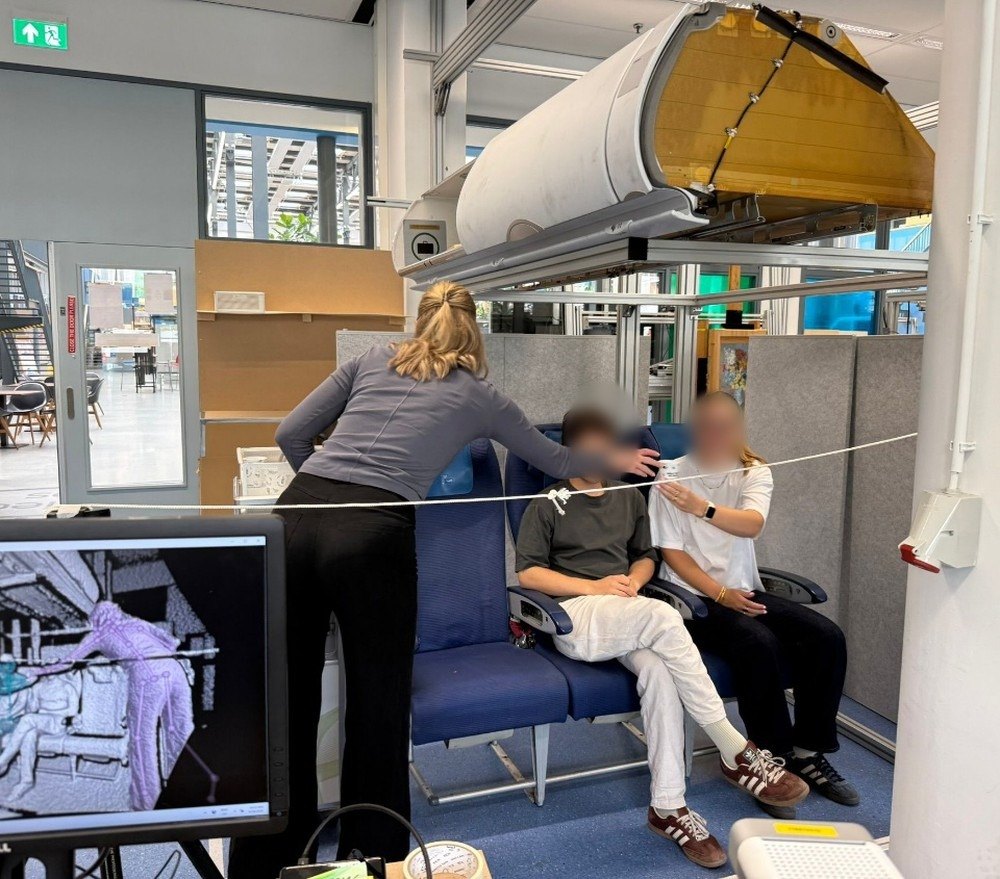
Galley work, cabin service and moving through the aisle past passengers.
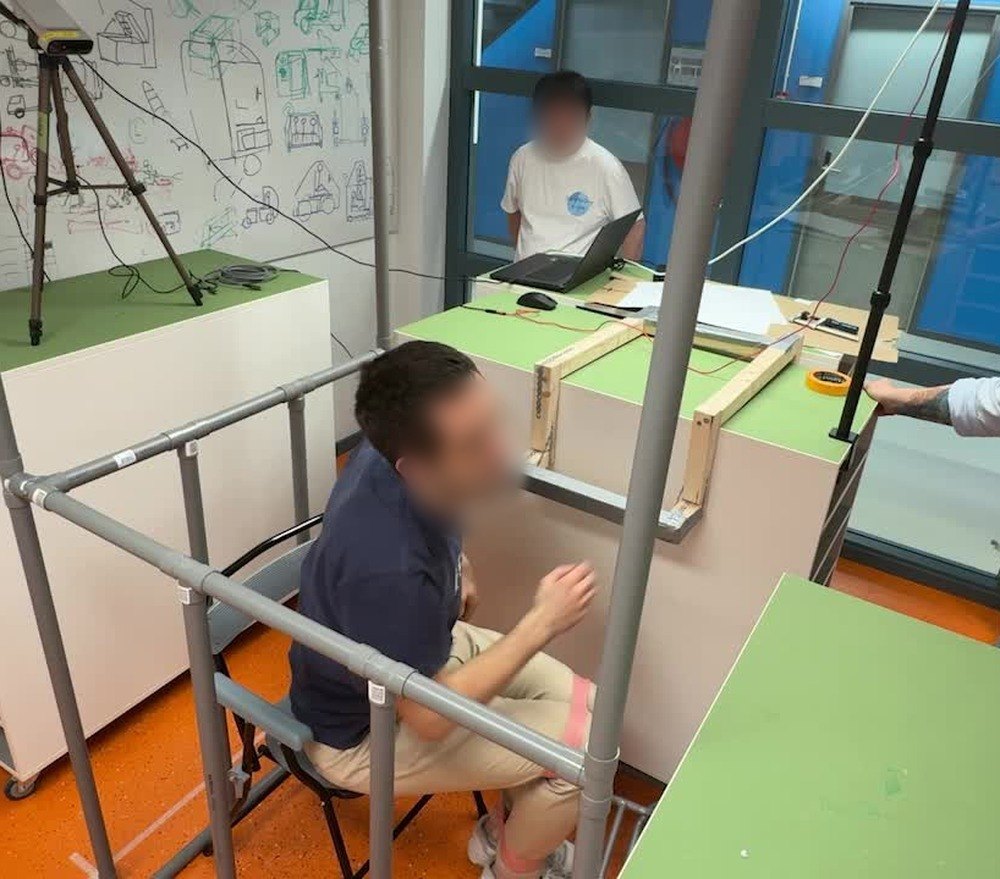
Boarding, moving from the aisle chair to the seat and using the lavatory, together with a caregiver.
Geometry
People
A design must pass both.
Sustainability built in
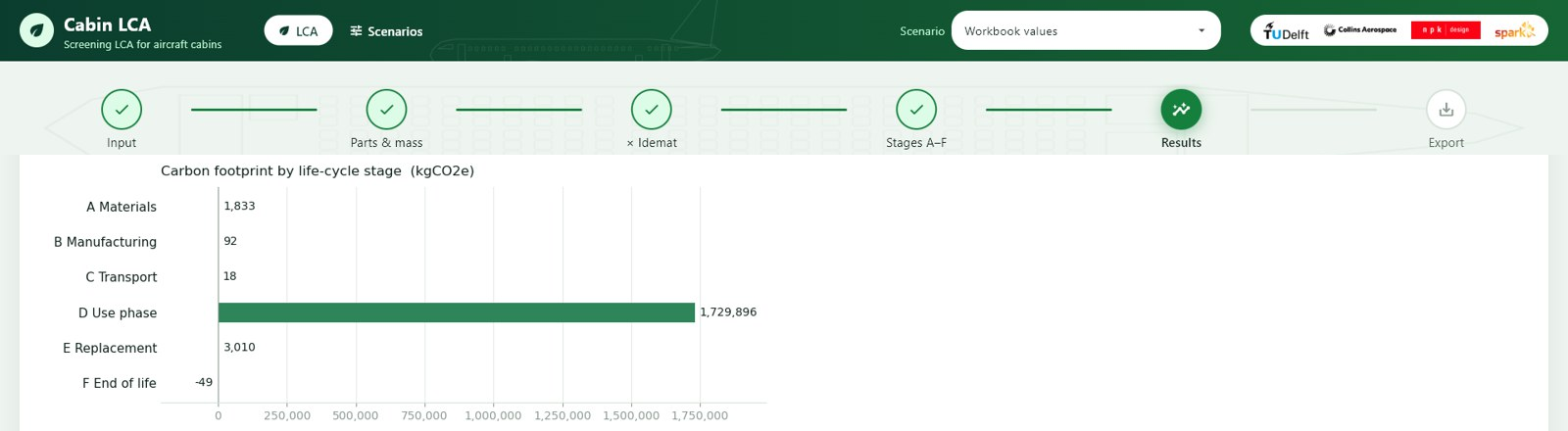
An online screening LCA for cabin design options: upload a part list, get the impact per life-cycle stage, following the Idemat procedure.
Over a cabin's life, flying the mass costs far more CO2e than making it, so reducing weight pays off most.
Open Cabin LCA (partner login)For CabinDemo partners. Results compare design options; they are not environmental claims. Data from www.ecocostsvalue.com (CC BY-NC 4.0).